

Specialized Wolf Appliance Repair in San Francisco
Mon–Sat: 8:00 AM – 7:00 PM
A Wolf oven door that will not close flush is more often blocked by something small than by a failed latch, so check the edges and the rack first.
Written for Wolf owners
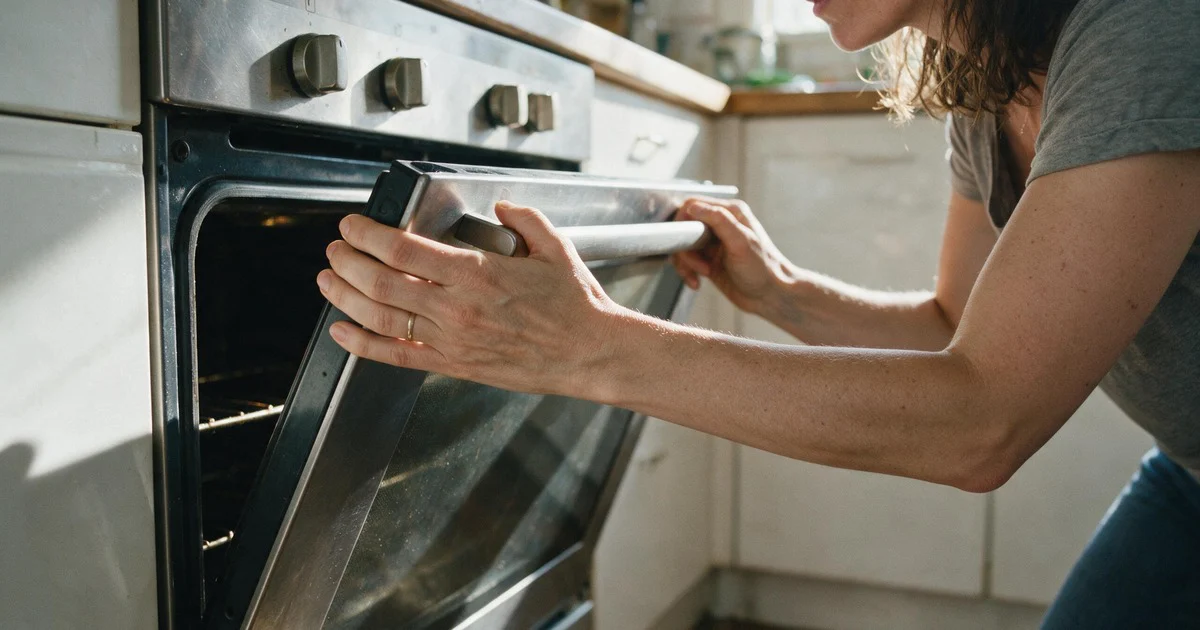
A Wolf oven door that stops short of closing, or springs back open, is most often being held off by something in its path: a rack pushed slightly out of place, a pan handle, a towel or a trapped crumb. Check the opening and the door edge for obstruction before you suspect the latch or hinges, and do not force the door shut.
Open the Wolf oven door fully when the oven is cool and look into the cavity with a flashlight. Racks that have been slid back unevenly, a baking sheet that has crept forward, or a rack that is not seated on its supports can all sit just inside the door frame and stop it closing. Run your eye along the front frame for anything protruding: foil that has been bent over a rack edge, a spilled piece of food, or an item stored in a warming space. Remove each item, close the door gently and see whether it now shuts flush.
Then check the door itself. A Wolf door that closes in the middle but gaps at one corner can be caught on something at that corner. A door that bounces back open when released may be hitting something near the hinge side. Describing which corner or edge is the problem helps a technician arrive prepared.
If the oven has a gasket or seal around the opening, look for a section that has folded, lifted or come out of its groove. Do not pull or reposition it, but note where it looks wrong. Check the glass and trim around the door for visible damage, and the area near the hinges for anything wedged in. If a door looks twisted or sagging when open, stop and have it looked at; a door that is out of square will not close properly no matter what you clear away.
A door that will not close is a mechanical problem first, so the display may say nothing. Wolf’s answers for its convection steam ovens list codes for control and data faults, such as E03, loaded incorrect process data with moisture on the control board, and E04, a process data error where the software has to be reloaded. Neither describes a door that fails to seat, and the checks Wolf lists for both are about power to the control, not the door hardware. If your oven shows a code only when you try to start with the door ajar, tell us that, because it separates a sensing issue from a mechanical one.
If the oven refuses to start because it thinks the door is open when it is shut, the switch that senses the door position may be the cause. That is a technician job.
With the oven cold, close the door slowly and watch where it first touches the frame. Hold the door with a light hand near the handle and notice whether it needs a little push to meet the frame evenly or whether it sits against the frame easily and then drifts open. A door that needs a push to close was probably being held off by something, so look again at the rack positions and the gasket. A door that closes freely but then drifts open suggests the latch is not holding, which is not an owner repair. Try the test twice, since a single try can be misleading if the door was already slightly open when you began.
An obstruction usually has a visible cause and is steady: the door stops at the same point every time, and clearing the cause fixes it. A latch or hinge fault is less consistent. The door might close on some tries and not others, feel loose, make a new noise when closing, or sag. A technician checks the hinge action, the latch engagement, the door switch and the alignment of the door to the frame. You can find the services involved on our speed oven repair and convection steam oven repair pages, and the SPO30CM model page is one example of what we list per model.
It is better not to. Heat escapes through the gap, and the oven may not run properly with the door ajar. Leave the Wolf oven unused until the door closes flush.
Yes, on a Wolf oven as on any other. A rack that is out of place or a pan that is too far forward can catch the door edge. It is the first thing to check.
No. Hinges carry the door’s weight under spring tension, and adjusting them without the right procedure can cause injury or damage.
Share a few details and we’ll confirm an appointment. Prefer to talk? Call us and we’ll help right away.