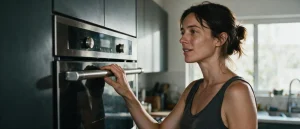
Wall Ovens
Symptoms, model context, and repair guidance for Wolf built-in oven appliances.

Specialized Wolf Appliance Repair in San Francisco
Mon–Sat: 8:00 AM – 7:00 PM
Wall Oven · in-home diagnosis
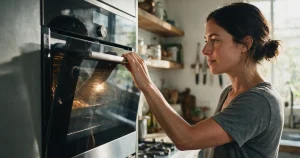
Wolf built-in oven service should begin with the complete model number, the exact operating change, and any message shown on the appliance. Wolf has used different platforms across current and legacy generations, so a symptom should be diagnosed within the correct model context rather than from a generic parts list.
Before any internal testing, define the symptom precisely. Record which burner, zone, oven cavity, cooking mode, drawer function, water function, or control is affected and whether another function still works normally.
A repeatable pattern is valuable. The technician should know whether the symptom appears immediately, only after heating, under high load, after cleaning, during one mode, or after a recent power event. In a built-in oven, preheating, baking and cleaning each use the heating and control systems differently, so the stage at which the problem appears is a real clue.
One symptom can have more than one cause. Model/platform identity and testing determine which system is actually responsible. An oven that heats slowly and one that heats and then shuts off are described the same way by many owners, but they lead to different questions.
Use only non-invasive checks that fit the exact appliance:
Do not remove protected panels, bypass safety devices, or perform live electrical testing as a homeowner step.
If a step is not described in the owner documentation for the exact model, do not treat a generic internet procedure as model-specific Wolf guidance.
If the display shows a code or text message, write it down exactly before turning power off. Wolf diagnostic meanings can vary by appliance family and generation, so use the related Wolf oven error codes content rather than a generic code list.
Open Wolf Error Codes and match the code to the appliance type and platform. Similar visible code values can have different meanings on different Wolf product generations.
A code narrows the diagnostic direction; it does not automatically identify the part that must be replaced. An oven thermometer reading beside the displayed temperature helps show whether the cavity itself is off.
Use the full model number from the rating plate to find the correct repair page. Our model library includes current and legacy Wolf products and groups cosmetic finish or handle suffixes under canonical repair models when appropriate.
The Wolf Models library contains canonical model records for current and legacy appliances. Finish/style variants should remain mapped to the verified canonical model relationship rather than creating guessed duplicate pages.
Stop using the oven if it overheats, continues heating after the controls are turned off, repeatedly trips the breaker, produces smoke, or smells like burning insulation.
Also leave the appliance off if continued use could worsen a water leak, damaged glass, door/interlock issue, severe overheating, or other safety condition.
A technician may test heating elements, relay outputs, RTD or temperature-sensor circuits, fans, door-lock feedback, wiring, power supply, control communication, and stored diagnostic information.
The service goal is to separate:
Repair scope should follow evidence from the exact appliance. Sensor readings and stored diagnostic information help show whether the oven is detecting a real heating problem.
Current and legacy Wolf built-in ovens can require different service information. Older models may use different controls, sensors, wiring, ignition systems, or error-code formats. If your product is no longer current, use the legacy model context rather than assuming a new-generation guide applies.
Legacy status alone does not establish that replacement is necessary. Condition, diagnosis, parts availability, installation fit, and the rest of the appliance should be considered.
Use Legacy Wolf Appliance Repair for the broader repair-versus-replace framework.
No, but it makes the diagnostic starting point much more precise. Send whatever model information is safely accessible and confirm the full rating label when possible.
No. A code points to a monitored system or condition. Wiring, sensors, power, controls, loads, communication, installation conditions, or other components may still need model-specific testing.
No. Record the code first. One normal documented reset may be reasonable when the appliance is otherwise safe. If the same symptom returns, repeated resets add little diagnostic value.
Normally no. Built-in and heavy Wolf products should remain installed until access is planned. Share cabinetry, trim, island, stair, elevator, gate, or parking restrictions in advance. No. This is appliance repair content and service positioning.
Send:
Symptoms, model context, and repair guidance for Wolf built-in oven appliances.
0732 on a Wolf M Series oven points to the lower oven light triac. A breaker reset is the only home step.
0821 on a Wolf M Series oven is a shorted upper MDL relay. Try a breaker reset, then call.
0822 is the lower-oven MDL relay shorted code on Wolf M Series. Reset the breaker, then book service if needed.
0931, also listed as 0920, flags a shorted upper right convection fan triac on a Wolf M Series oven.
0932 (shown by Wolf as 0932 or 0C20) is a shorted lower right convection fan triac in the lower oven.
0A31 or 0A20 on a Wolf M Series oven points to the upper left convection fan triac. Reset first, then call.
Wolf coffee system repair in San Francisco with common symptoms, safe checks, model and error-code guidance, and diagnostic-first service.
Wolf convection steam oven repair in San Francisco with common symptoms, safe checks, model and error-code guidance, and diagnostic-first service.
Wolf dual fuel range repair in San Francisco with common symptoms, safe checks, model and error-code guidance, and diagnostic-first service.
Wolf electric cooktop repair in San Francisco with common symptoms, safe checks, model and error-code guidance, and diagnostic-first service.
Wolf gas cooktop repair in San Francisco with common symptoms, safe checks, model and error-code guidance, and diagnostic-first service.
Wolf gas range repair in San Francisco with common symptoms, safe checks, model and error-code guidance, and diagnostic-first service.
Wolf induction cooktop repair in San Francisco with common symptoms, safe checks, model and error-code guidance, and diagnostic-first service.
Wolf induction range repair in San Francisco with common symptoms, safe checks, model and error-code guidance, and diagnostic-first service.
Wolf microwave repair in San Francisco with common symptoms, safe checks, model and error-code guidance, and diagnostic-first service.
Wolf outdoor gas grills are built for heavy use, but San Francisco weather is hard on outdoor cooking equipment. Fog, salt air…
Wolf rangetop repair in San Francisco with common symptoms, safe checks, model and error-code guidance, and diagnostic-first service.
Wolf speed oven repair in San Francisco with common symptoms, safe checks, model and error-code guidance, and diagnostic-first service.
Wolf vacuum seal drawer repair in San Francisco with common symptoms, safe checks, model and error-code guidance, and diagnostic-first service.
Wolf warming drawer repair in San Francisco with common symptoms, safe checks, model and error-code guidance, and diagnostic-first service.
Share a few details and we’ll confirm an appointment. Prefer to talk? Call us and we’ll help right away.