

Specialized Wolf Appliance Repair in San Francisco
Mon–Sat: 8:00 AM – 7:00 PM
A weak flame on a Wolf range burner is often blocked ports, a cap out of place or a knob setting, and none of that needs gas hardware to check.
Written for Wolf owners
When one Wolf range burner burns smaller than the rest, the cause is usually at the burner itself: food or grease in the ports, a cap that is not seated, or a knob not turned as far as you think. When every burner is weak at once, look at the gas supply to the home. Either way, the adjusting is for a technician, and the looking is for you.
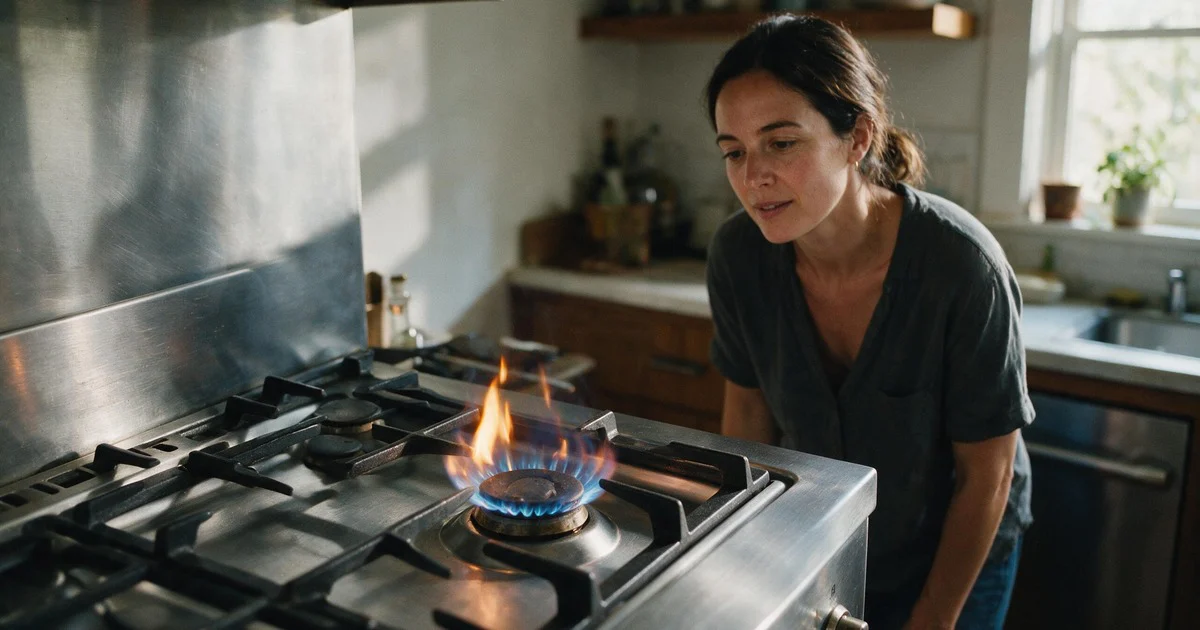
Start with a comparison, not a theory. Light each burner in turn on high and look at the flame. A single burner with a short, ragged or uneven flame while the others look right is a local burner problem. Two neighboring burners that are weak might share a cap type or a spill. If all of them are low, including the oven’s gas burner if your range has one, the question moves outside the appliance: has anything changed with the gas supply to the house, or with another gas appliance recently?
Also consider what you are comparing. A burner on a low setting looks small by design, and a simmer position is supposed to be a gentle flame. Make sure you test on the highest setting before deciding the flame is too low. Wolf lists the 48-inch SRT484W with a wok burner of 35,000 Btu and a total output of 97,200 Btu from serial 18180000, so a rangetop like that has burners of very different sizes by design. A wok burner that looks big next to a small burner is not a sign of a fault in the small one.
Sealed burners rely on small openings around the burner cap for the flame. Spilled food, boiled-over water or grease can partly block them, and the result is a shorter flame with gaps. With the burner off and cool, lift the cap and base and look for blocked openings and residue. Clean with a damp cloth or a soft brush, let everything dry fully, and refit the base and the cap so each sits flat without rocking.
If the flame is normal after cleaning and reseating, the cause was blockage or seating. If the same burner is weak again after a few uses, there may be debris further in, which needs a technician with proper access.
The codes Wolf publishes for its dual fuel ranges deal with oven electronics and sensors. For example, code 0021 is listed as a drive relay or triac for an element closed when it should be open, and code 02 as an over temperature condition that occurs at 630°F with an unlocked door and 950°F with a locked door. Neither says anything about a burner flame. A small surface flame therefore comes with no display message, and the evidence is what you see at the burner.
That is useful in one respect: if the oven side works normally and shows no code, the problem is probably limited to the surface burner or the gas feeding it.
A strong draft or hood can change how a flame looks. Wolf describes the CTWH36 wall hood as having three blower speeds and heat sensing that starts ventilation automatically. A hood running at its highest speed can pull a flame sideways or make it look lower. Try the burner with the hood off and the nearby windows closed before you judge the flame.
If you smell gas, turn the burners off and ventilate the room. That is a different situation from a low flame and needs to be handled right away.
Gas pressure, orifice condition, the valve behavior across the knob’s range and the air mixture are all adjustments inside the appliance. A technician measures supply, inspects the burner and the orifice, and checks the valve; none of this is something to attempt with the cooktop’s panels off. If your appliance is a rangetop, our Wolf rangetop repair and gas cooktop repair pages describe what the visit covers, and the SRT484F page is an example of a model page for a 48-inch rangetop.
No. Adjustments involve gas hardware and are for a technician. What you can do safely is clean the cap and base, dry them and refit them correctly.
It is a bigger burner by design. Wolf lists the SRT484W wok burner at 35,000 Btu, so it will look larger than a standard burner on the same rangetop.
A flame that is yellow, lifting or irregular is worth stopping for, and a smell of gas always is. Turn the burner off and book a visit.
Share a few details and we’ll confirm an appointment. Prefer to talk? Call us and we’ll help right away.